Don't let the puny aroma or light ruby color of this wine fool you. As soon as I took a sip, I had to go scrounging in the refrigerator for something I could turn into a bold, rich, saucy dish to hold up to the meaty taste. Luckily, I had some left over roast that I was able to transform with the help of some Masterpiece BBQ sauce. Perfect pairing!
It's from Lodi, California, of course... all really good Zins are! The award-winning Rutherford Ranch Winery is located on the Silverado Trail and has a portfolio of seven labels, all from sustainable vineyards. The ladybug logo of the Predator label represents the natural predation method of using the vine-friendly ladybugs for insect control.
It started off with a mild aroma that made me think of having a cup of coffee in a pine forest right after a rain. The flavor of full-on spicy and smoked meat coming to a peppery fruit finish makes it a perfect fit for summer grilling and complimentary to any marinade or BBQ sauce. Save your white wine for poolside... this is the wine you want next to the ribs and brisket.
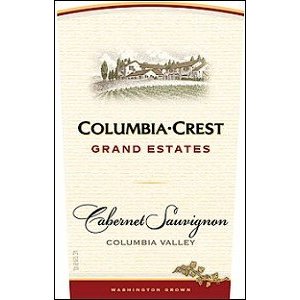
After a recent wine tasting, I was given a leftover bottle of a familiar label I've not tried before... Columbia Crest Grand Estates Cabernet Sauvignon 2010. I think the reason I've resisted is because Columbia Crest is ubiquitous, which always makes me think very little craftsmanship has gone into its creation. Plus, it also bottles under the label of Two Vines, which I have tried and didn't like. However, this Cab is a great all purpose wine, with enough legs to work with food, but not so overwhelming it can't be enjoyed on its own. It begins with some minty floral notes in the aroma. The taste starts earthy, but follows up with a bit of semi-sweet chocolate, dark cherries and a touch of coffee, adding herbs on a nice finish with medium tannins. Wine Spectator rated it a "Best Buy" with 89 points; Wine Enthusiast rated it 88. SRP is $12, so it's a very affordable choice I will make in the future.
Tonight, with my lover-ly spinach tuna artichoke salad (recipe here... super good), I'm enjoying Ferrari-Carano Fume Blanc (Sauvignon Blanc), 2012, from Sonoma County, California. OK, first of all, check out the winery. It looks like a villa on the Riviera. No, scratch that. It looks like heaven. It's called Villa Fiore, House of Flowers. Yeah, after seeing that, I'm raring to go to my office... NOT! I may need to rethink my retirement plan with regard to state of residence.
The winery is actually in Healdsburg, California, located on the Russian River. It hasn't been in operation very long, just since 1985. The gardens were planted by owner, Rhonda Ferrari-Carano. And, no, there's no relationship to the world-renowned car manufacturer.
The term Fume Blanc is just a fancy name for Sauvignon Blanc and was promoted by Robert Mondavi to identify the specific Sauvignon Blanc grapes produced from vine cuttings that originated in the Sauternes vineyards of Chateau d'Yquem, in the Bordeaux region of France and supposed to be, like, the most superior grapes in the Universe. Well, la-di-da, la-di-da, la, la.
OK, let's get to the wine. I smell predominantly pears, with a little bit of peach and almonds. There's more pear on the taste, with a little bit of pineapple and grassy lime. The winemaker's notes say something about kiwi (which I couldn't identify) and guava (which I've never tasted), and then talked about some spice notes (which my naive palate couldn't pick out). The finish is really crisp, and there's just enough acidity to work well with food. It was really good with my salad but, because the winemaker's notes said it worked well with sushi and cheese, I tried it with the cheeses I had available in the fridge — sorry, no sushi. I tried it with a hickory smoked Swiss, a sharp cheddar and mozzarella. The cheddar won, but I liked it better with the salad of spinach and tuna, which could count as sushi, I guess... kind of... maybe.
The wine is very affordable, about $15/bottle — at which I must exclaim... they must sell a HELLUVA lot of wine to maintain THAT winery for those kind of prices!!! Previous vintages were consistently rated between 89 and 91, this particular wine has been rated at 90 by Connoisseur Guide. It has a little too much pear taste for me, but definitely worth the price. At 13.8% alcohol content, please drink responsibly.
My blog is about discovery of what is possible after 50... new adventures, so to speak. One thing I found a latent passion for is wine. And, not just the drinking part, although I do enjoy trying to identify the complex flavors found in wine. I'm also able to satisfy my history nerdiness, as well, by researching the varietals, vineyards and processes that go into the making of it. And, just as I love trying new restaurants, I also love trying new wines. So, a portion of my blog will be dedicated to reviewing new wines.
I had seen the wine designation Claret before, while reading Agatha Christie books, and just associated it with English women of eighth generation nobility who would insist on taking afternoon tea breaks that included cucumber sandwiches and petite fours with a teeny glass of sherry. So, when I had the opportunity of saving an almost full bottle of leftover Claret from its inevitable oxidated demise three days after being opened, I really didn't expect it to be worth drinking, much less to actually like it. Incredibly, the wine was still quite good and surprisingly to my taste. As is my habit, especially with a favorable experience, I dug into some research about the wine, Francis Ford Coppola's 2010 Black Label Claret.
I learned that Claret is not a varietal but, rather, a method of blending. But, the story of this wine goes a little deeper than that. It is produced by a blending process that is a replication of one used by the rather fascinating Captain Gustave Niebaum, a Finnish sea captain, who by 1850 was the leading fur trader in the world — operating from the Alaskan Commercial Company, a trading company he founded based in San Francisco — and was the Russian Consul to the U.S. in 1867. He explored much of Alaska, prepared most of the maps of the area and was a strong advocate of the U.S. purchase of Alaska. But, he also established Inglenook Winery, in 1879 in Rutherford, California, a small village in the Napa Valley. It was the first Bordeaux-style winery in the U.S., making him kind of the father of Bordeaux blending in America. Francis Ford Coppola purchased Inglenook in 1975 with money he made from "The Godfather." (See? I wasn't kidding about the history nerdiness.)
What is Bordeaux-style? It's a blending of of the grapes grown in the Bordeaux region of France, which are Merlot, Cabernet Sauvignon, Cabernet Franc, Petit Verdot, and small amounts of Malbec and Carmenere, aged at least one year in oak. The French chose the name Bordeaux. The English, historically at odds with the French on so many levels, chose to call the wine Claret, an anglicized version of Clairet, the most common wine exported from Aquitaine for the 300 years it was under English control. While the French word Clairet actually pertained to a rose wine, over the years the term Claret has come to mean any red wine blended with grapes traditionally associated with the Bordeaux region of France.
So, let's get to the wine. It is a blend of Cabernet Sauvignon (79%), Petit Verdot (13%), Malbec (5%) and Cabernet Franc (3%). I'm not much of a purist when it comes to red wines. I really prefer the blends, and this one is a new favorite.
On the nose... vanilla and strawberries that leads really well to an earthy palate of nutmeg, coffee and leather. It would work well with any savory foods, like beef stroganoff or prime rib. Best part... it is a fraction of what you would pay for an imported French Bordeaux (less than $20/bottle) and is consistently rated 86 points with consumer reviewers. Highly recommended.